Single Open Top-5 Primaries
A Top-5 Single Open Primary is an election in which all candidates—regardless of party—appear together on one primary ballot, and all voters can participate by choosing their favorite. The top five finishers advance to the general election, where voters choose among a broader, more representative field.
The "Primary Problem"
The way we currently decide who makes the final ballot is shutting voters out and skewing our politics. This has been dubbed the "Primary Problem."
Iowa’s closed primaries require voters to register with a party to participate. That excludes over a third of Iowans — registered Independents — from elections their taxes fund.
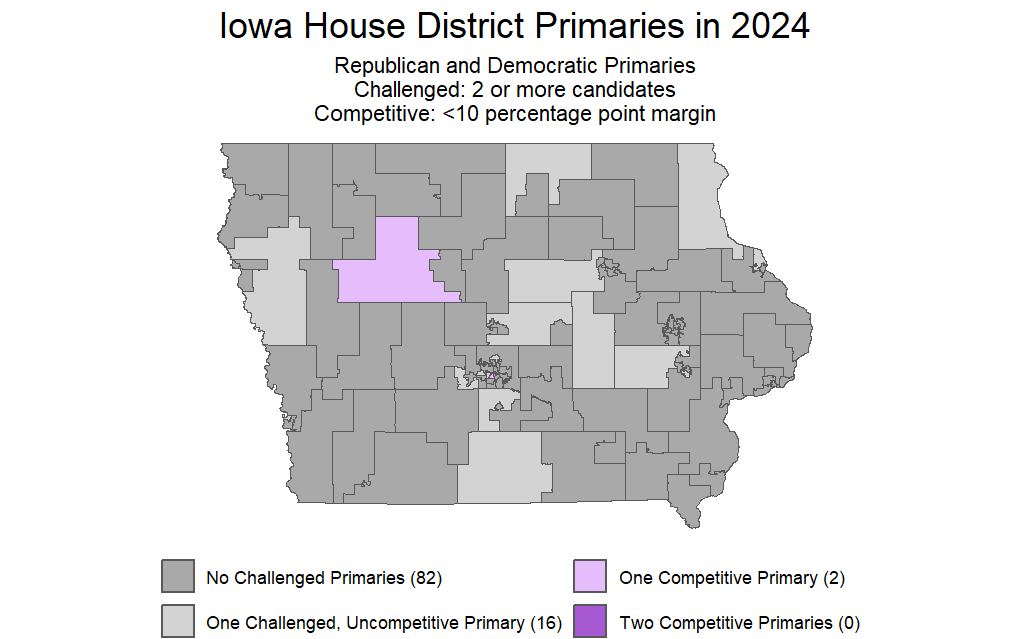 Worse, in most districts, the primary is the only election that matters because the general election is often so tilted towards one party or the other that it doesn't matter.
And turnout? In 2024, barely 10% of voters participated in the State House primaries.
The result: Primary elections have become increasingly non-competitive, extremely polarizing, and easy for politicians to manipulate.
We Can Fix This!
We solve the primary problem with Single-Open Top 5 Primary Elections:
- All possible candidates compete on a single ballot.
- All voters participate and pick their one top-favorite candidate
- The 5 leading candidates advance to a Ranked Choice general election.
This makes it highly likely that at least one candidate from each major party will advance to the general election, while also opening the door to alternative options and third parties.
Voters overwhelmingly want more choices and more control on the elections - Voting 2.0 is one of the simplest ways to get us there.
Shouldn't the Parties Choose Their Candidate for the General Election?
At Better Ballot Iowa, we’re not anti-party — we’re pro-voter.
If parties want to endorse choose their nominees through conventions, we support that. But primary elections are paid for with your tax dollars, and any taxpayer funded elections should be open to all voters.
In the long run, this approach is good for voters and for parties. A transparent, voter-centered system gives candidates more freedom to represent their communities — and gives parties more room to test ideas without fear of spoiling the general election.
What About Third Parties?
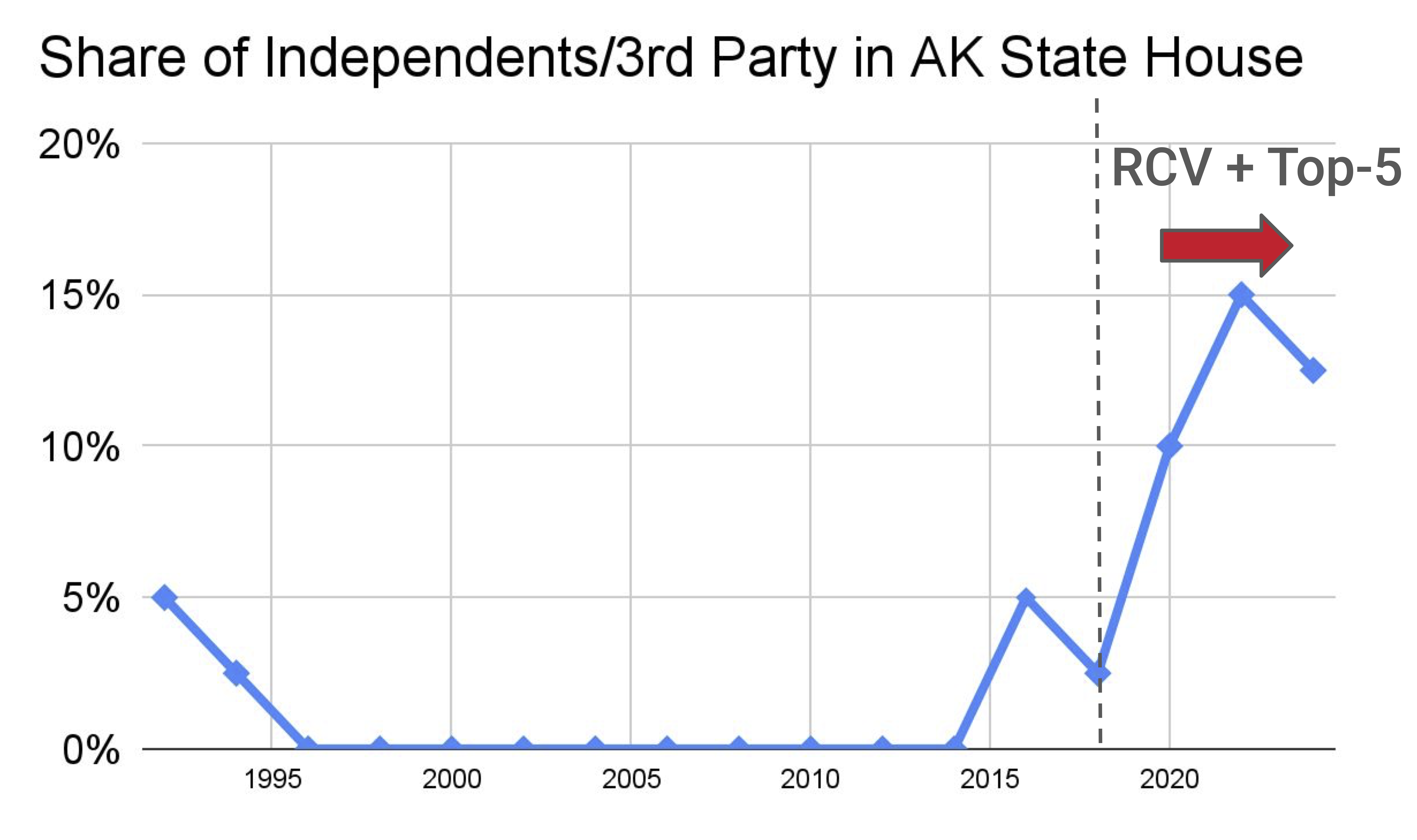
There is a common fear that Top-4 or Top-5 systems would hurt third parties. But, the experience in Alaska is the opposite. In Alaska, after adopting the system, the number of Independent and Third Party candidates elected to the State House broke 10% for the first time ever, better reflecting the broadness of the electorate (65% of Alaskans are third-party or non-party voters).